
You know this: dining halls close, students don’t.
If you walk through campus at 11 p.m., you’ll see it everywhere—libraries full, dorms active, people still moving. The demand for food doesn’t drop off. It just gets harder to serve.
So what are campuses actually doing about it?
Since bringing our platform to the U.S., we’ve launched at dozens of small and large universities. Here’s how we’ve seen universities handle late-night demand, and here is what we’ve seen works best.
The Gap: Dining Hours vs. Student Life
Dining schedules are predictable: breakfast, lunch, dinner, close.
Students are not. They’re:
- Studying late
- Coming back from practice
- Working night shifts
- Hanging out well past dinner hours
So when dining halls close, the demand doesn’t go away. It just shifts into places your dining program doesn’t reach. That’s the gap.
What Students Actually Do After Dining Halls Close
If you ask students, the answer is pretty consistent. They patch together whatever’s available.
Here’s what that usually looks like.
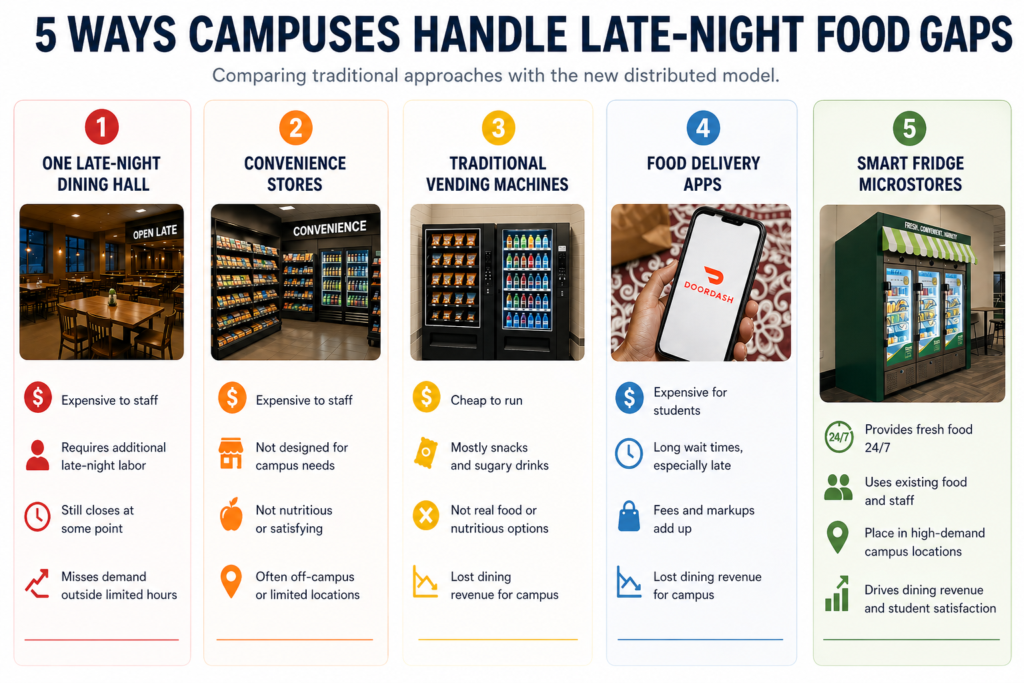
1. One Late-Night Dining Hall (If You’re Lucky)
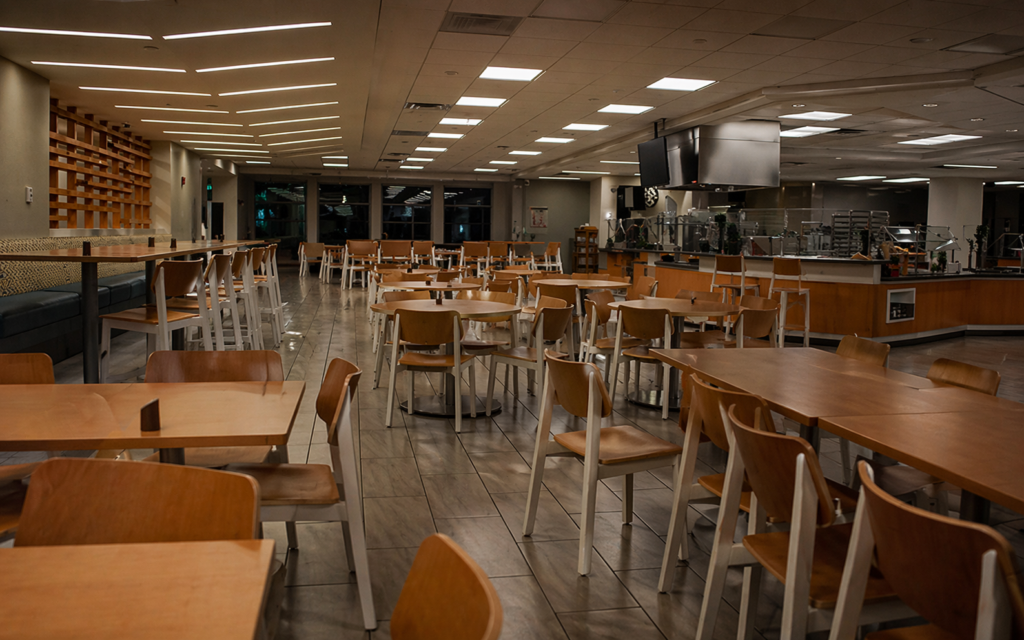
Some campuses keep a single location open later.
This helps a little, but it creates tradeoffs:
- It’s far from most students
- The menu is limited
- Labor costs are high
- It still eventually closes
The open-late model serves some demand but misses much of it.
2. Campus Convenience Stores
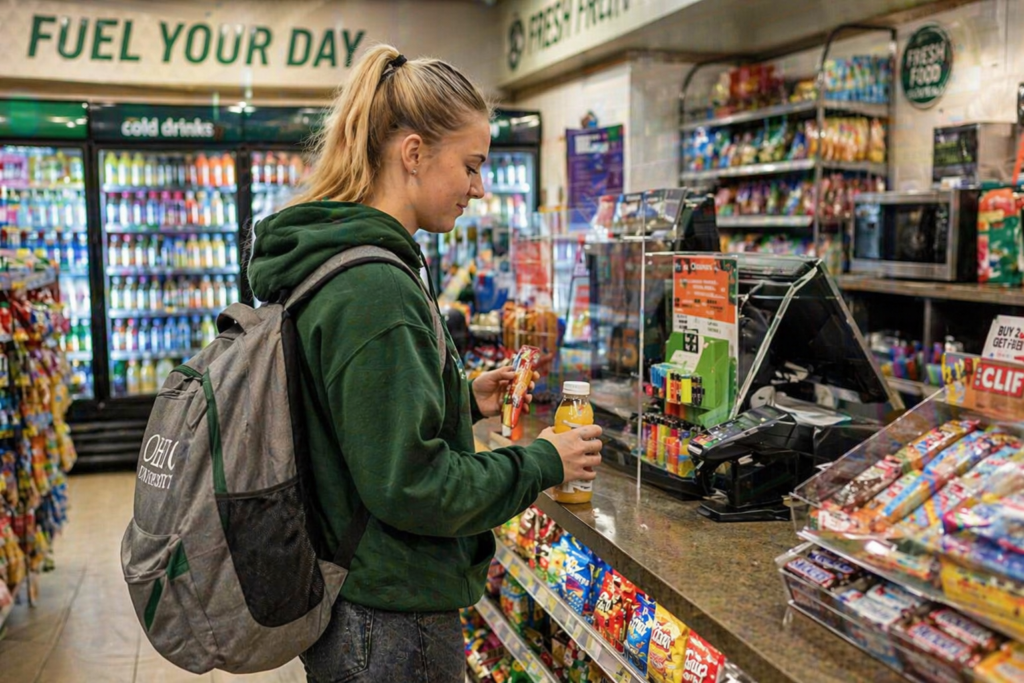
These are usually open later than dining halls, allowing students to grab:
- Snacks
- Drinks
- Packaged food
But here’s the issue: these are still not real meals that students crave and need.
3. Traditional Vending Machines
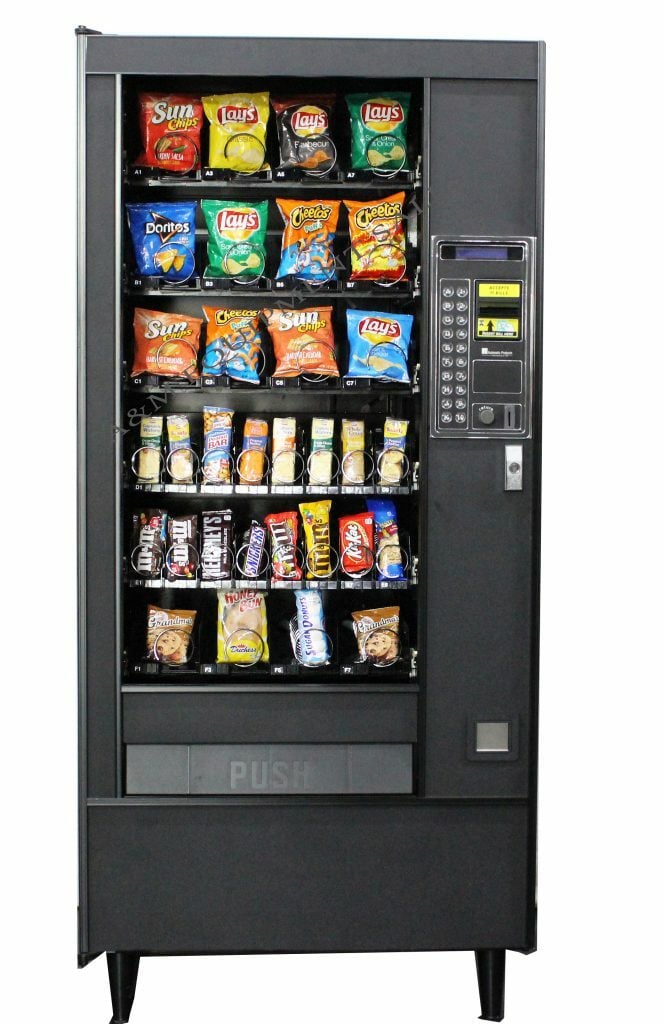
This is the fallback.
They’re everywhere, but they’re not solving the real need. Students don’t want:
- Chips
- Candy
- Another soda
They want something that feels like food.
Vending gives access, but not satisfaction or nutrition.
4. Delivery Apps
When everything else fails, students open their phones to their favorite delivery app.
It works—but it comes with friction. Delivery apps typically
- Are expensive for students
- Require long wait times
- Have inconsistent availability late at night
And from the university’s perspective, it’s lost revenue: students are still spending, just not with you.
Labor is the Constraint
Most schools don’t have a food problem; they have a staffing problem.
Late-night service is hard because:
- You can’t staff every building
- You can’t justify labor for scattered demand
- You can’t keep full kitchens running all night
So everything becomes a compromise: limited hours, locations, and options.
What’s Actually Working: More Access, Not More Service Hours
The campuses that are solving this aren’t extending service hours. They’re expanding access.
Instead of asking:
“How do we keep dining open later?”
They’re asking:
“How do we make food available everywhere, all the time?”
Launch Fresh Food Locations Around Campus—Immediately
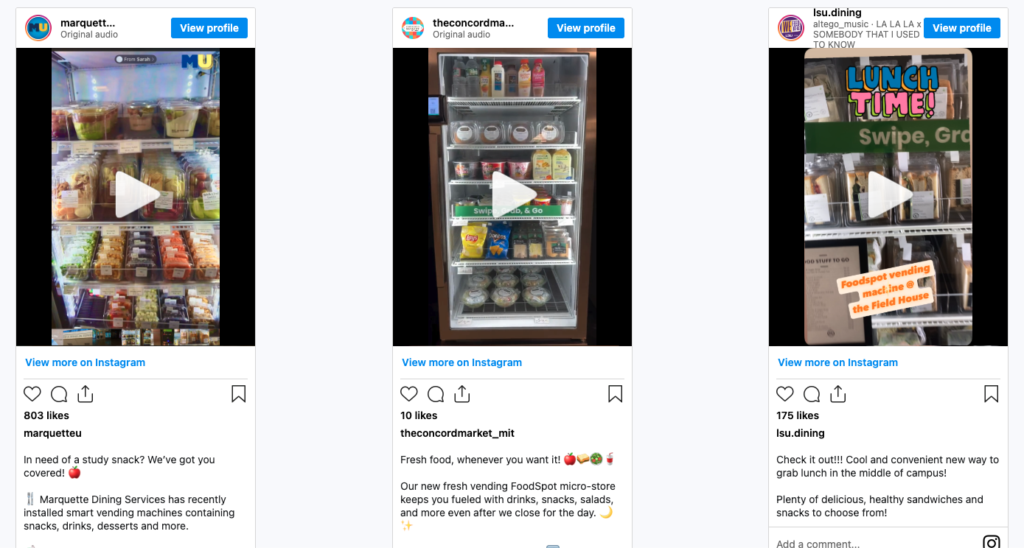
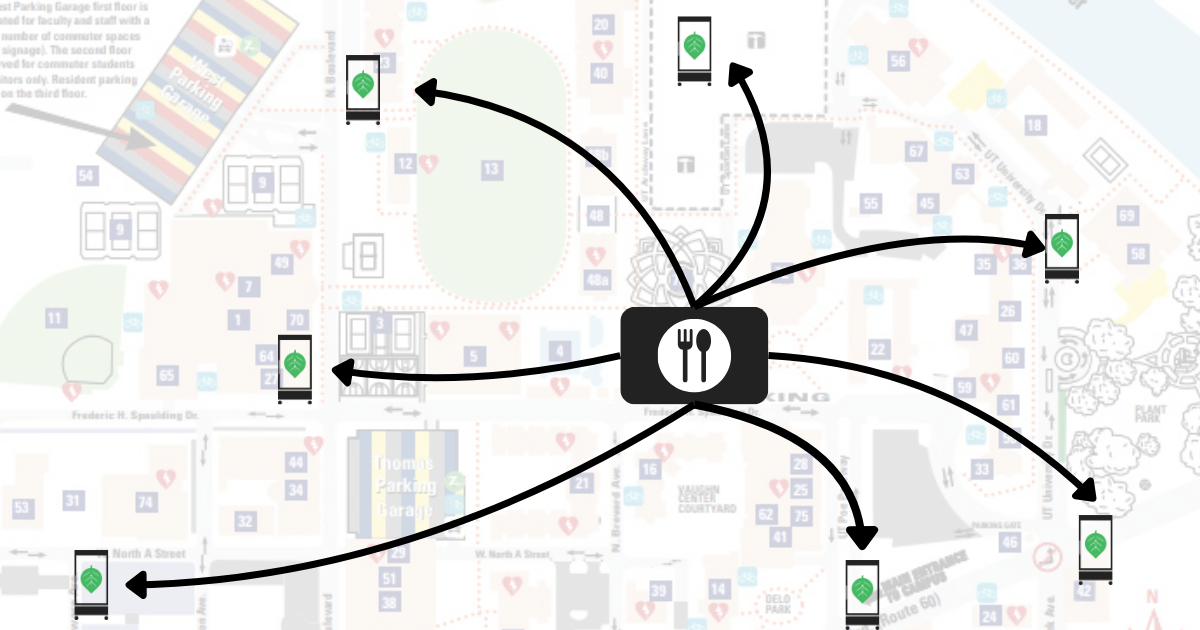
Instead of one late-night dining hall, they’re using fresh food microstores to make food available where students already are:
- Dorms
- Libraries
- Academic buildings
- Rec centers
No buildouts. No onsite staff. Just access.
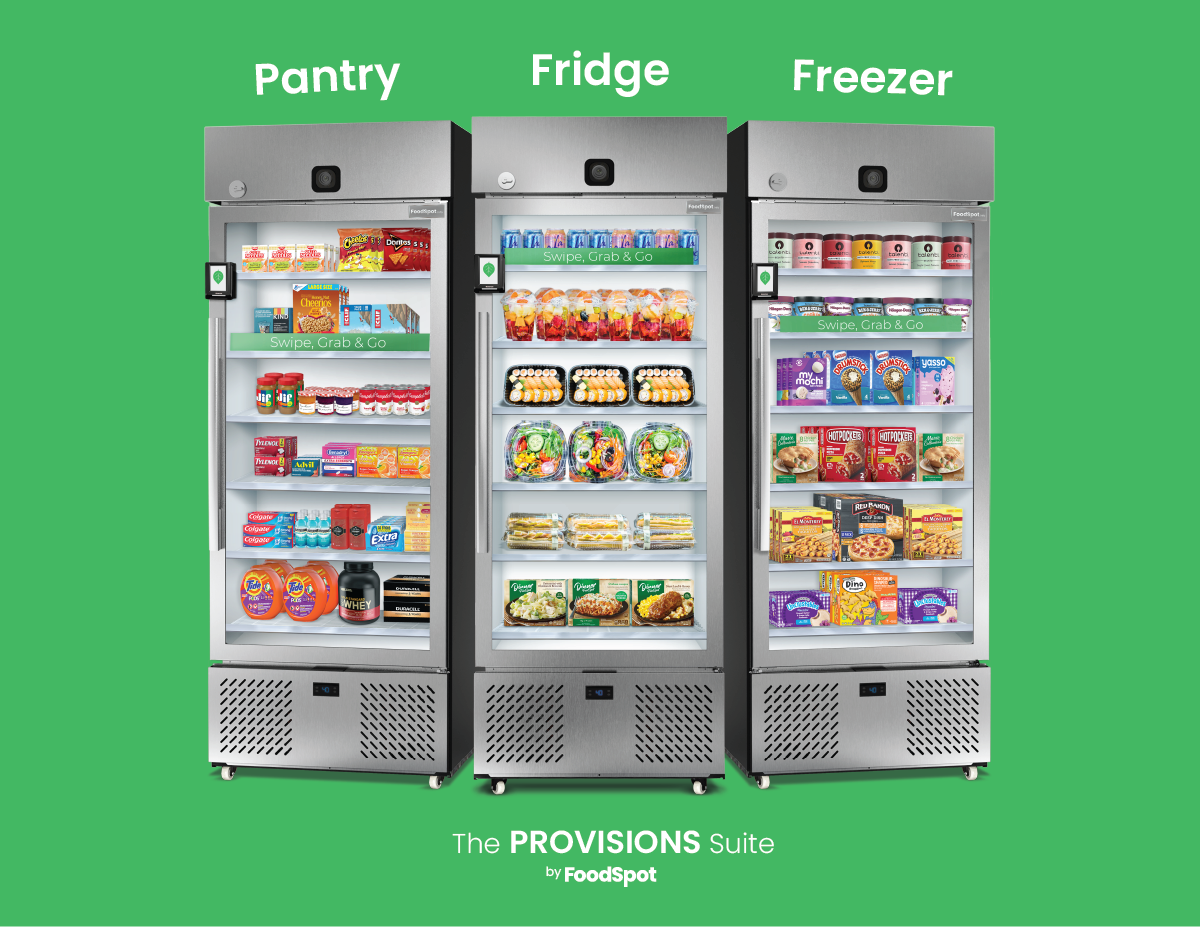
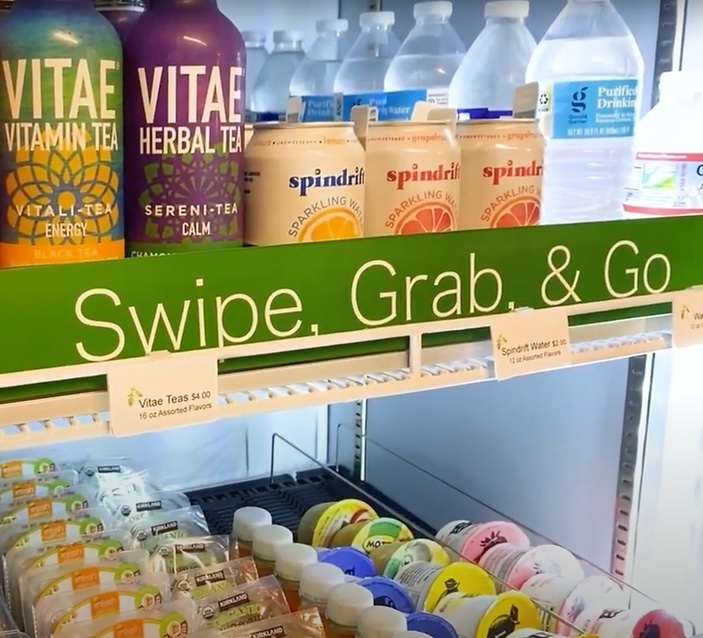
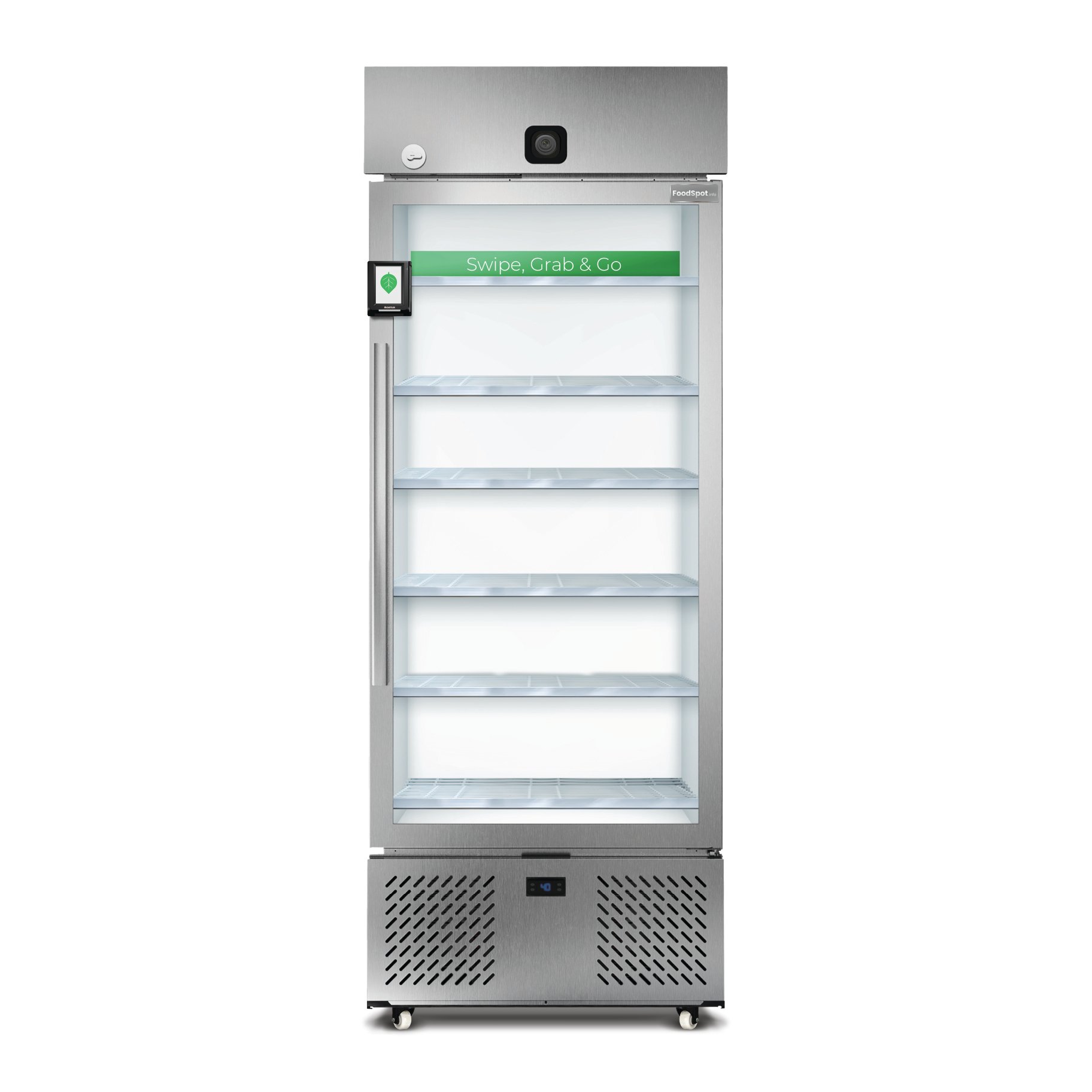
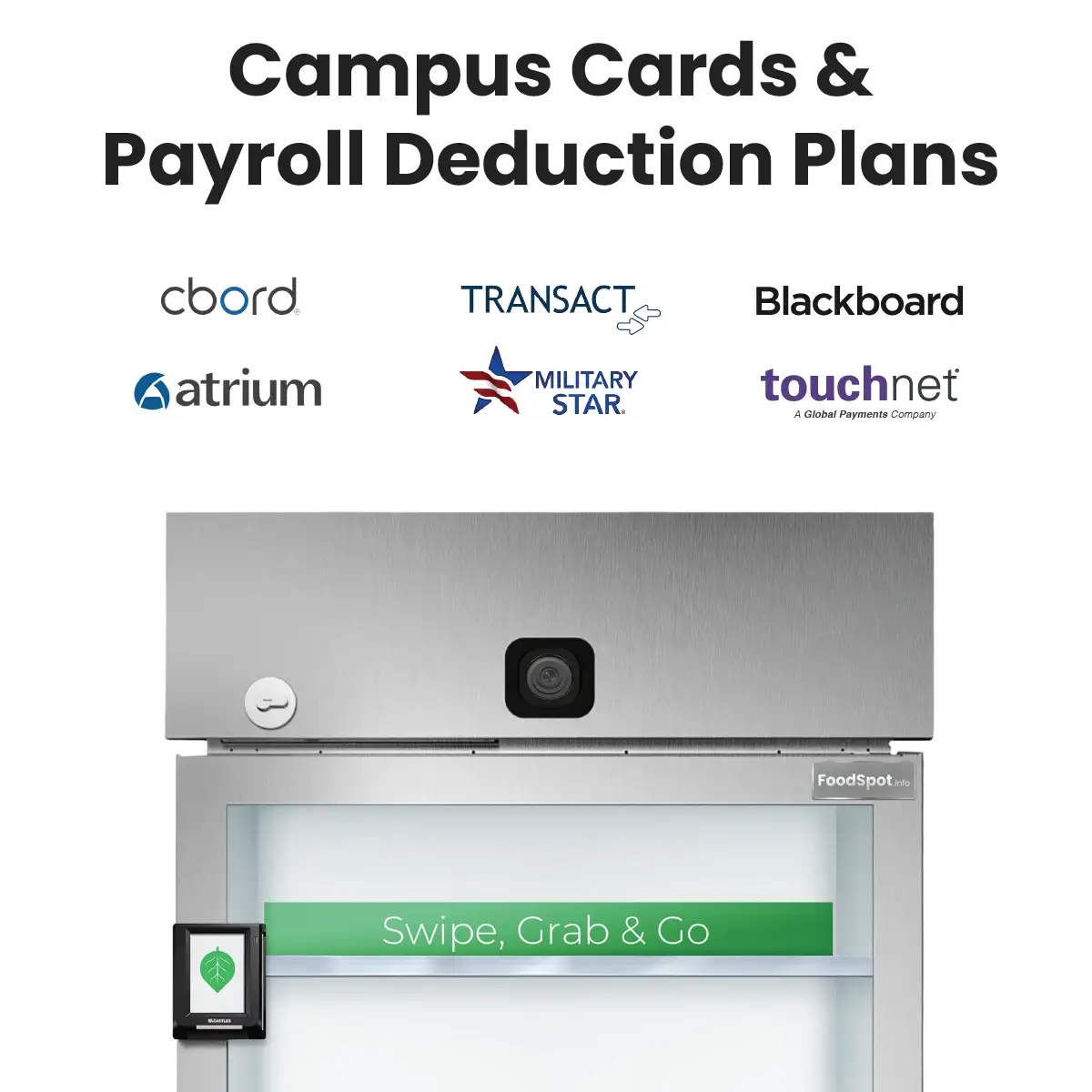
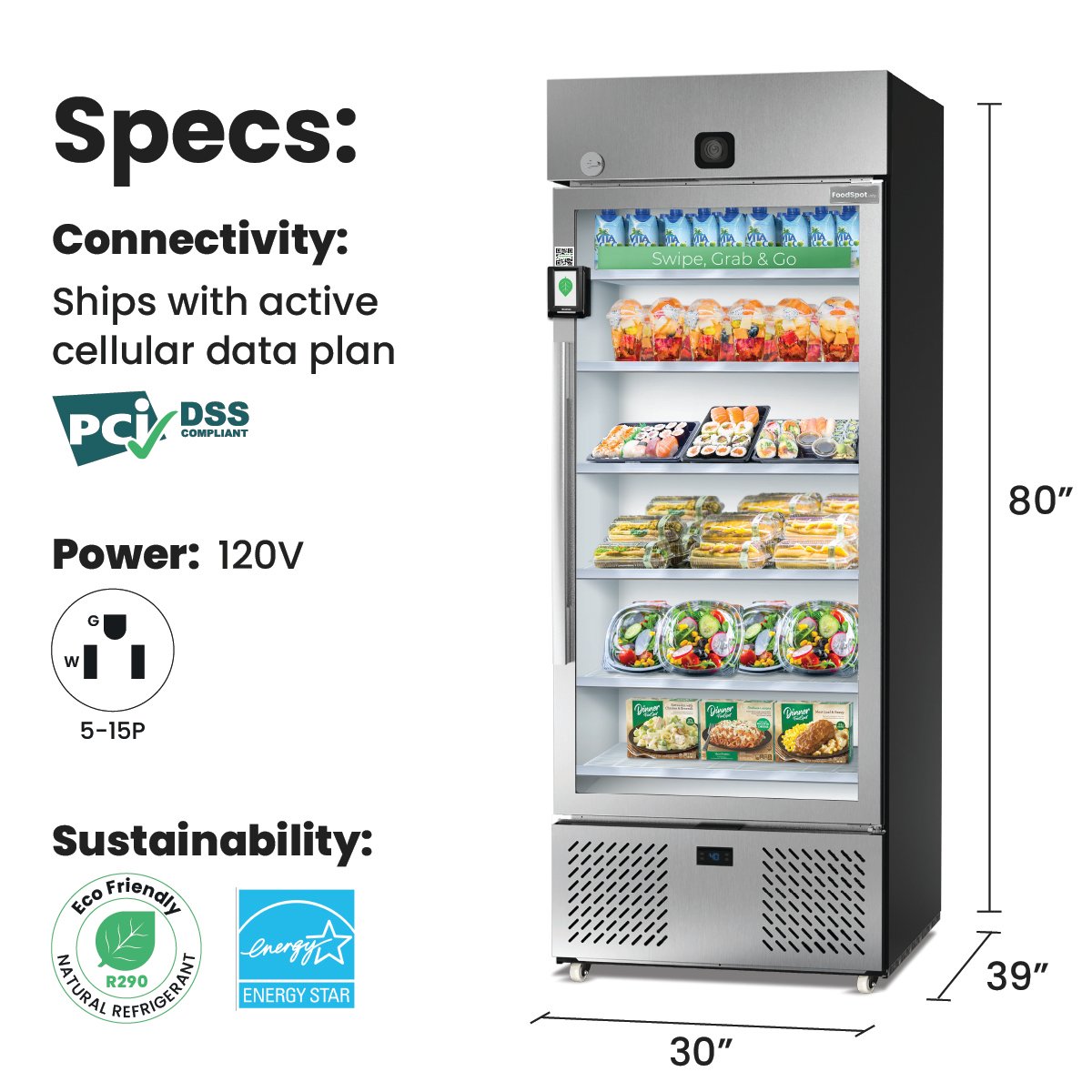
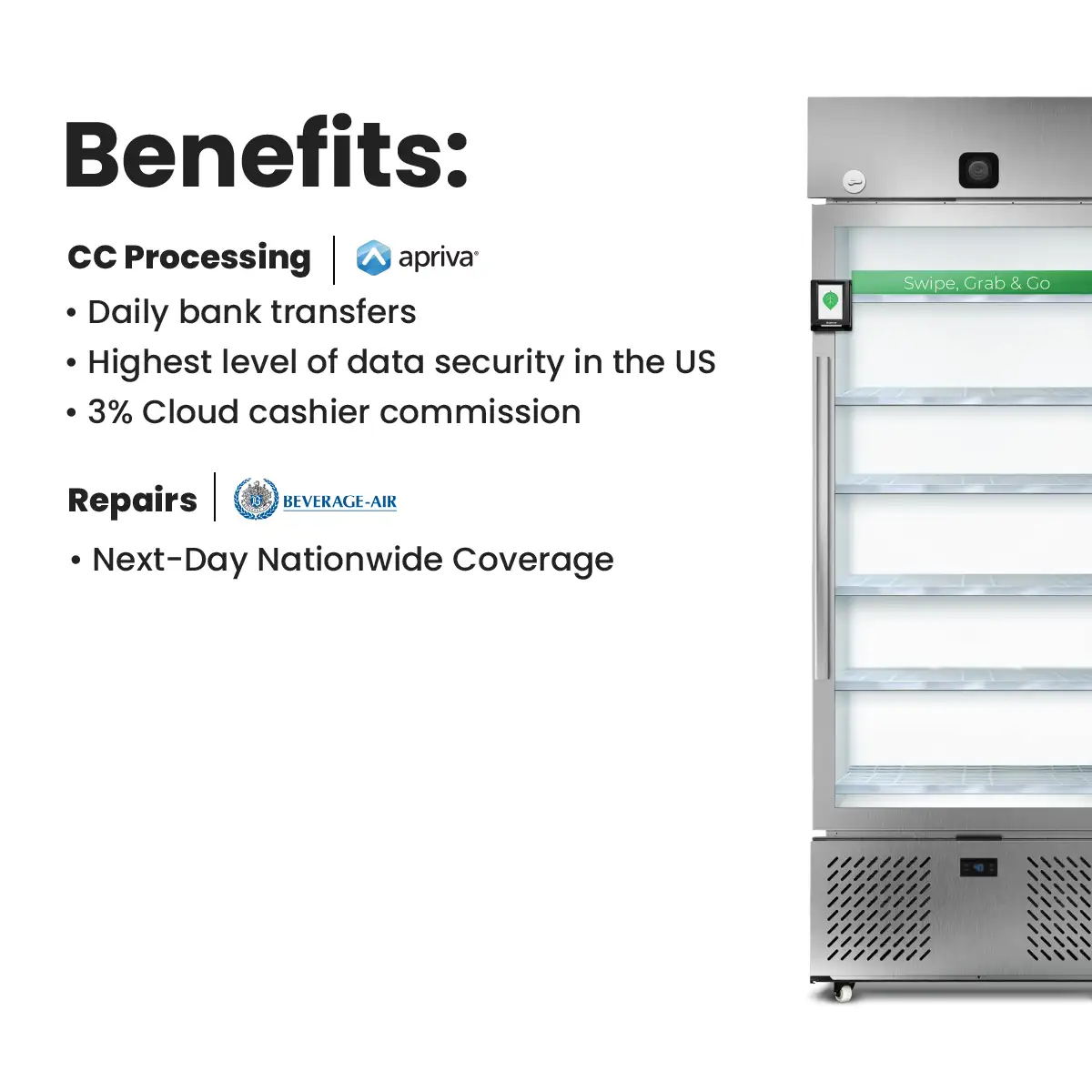
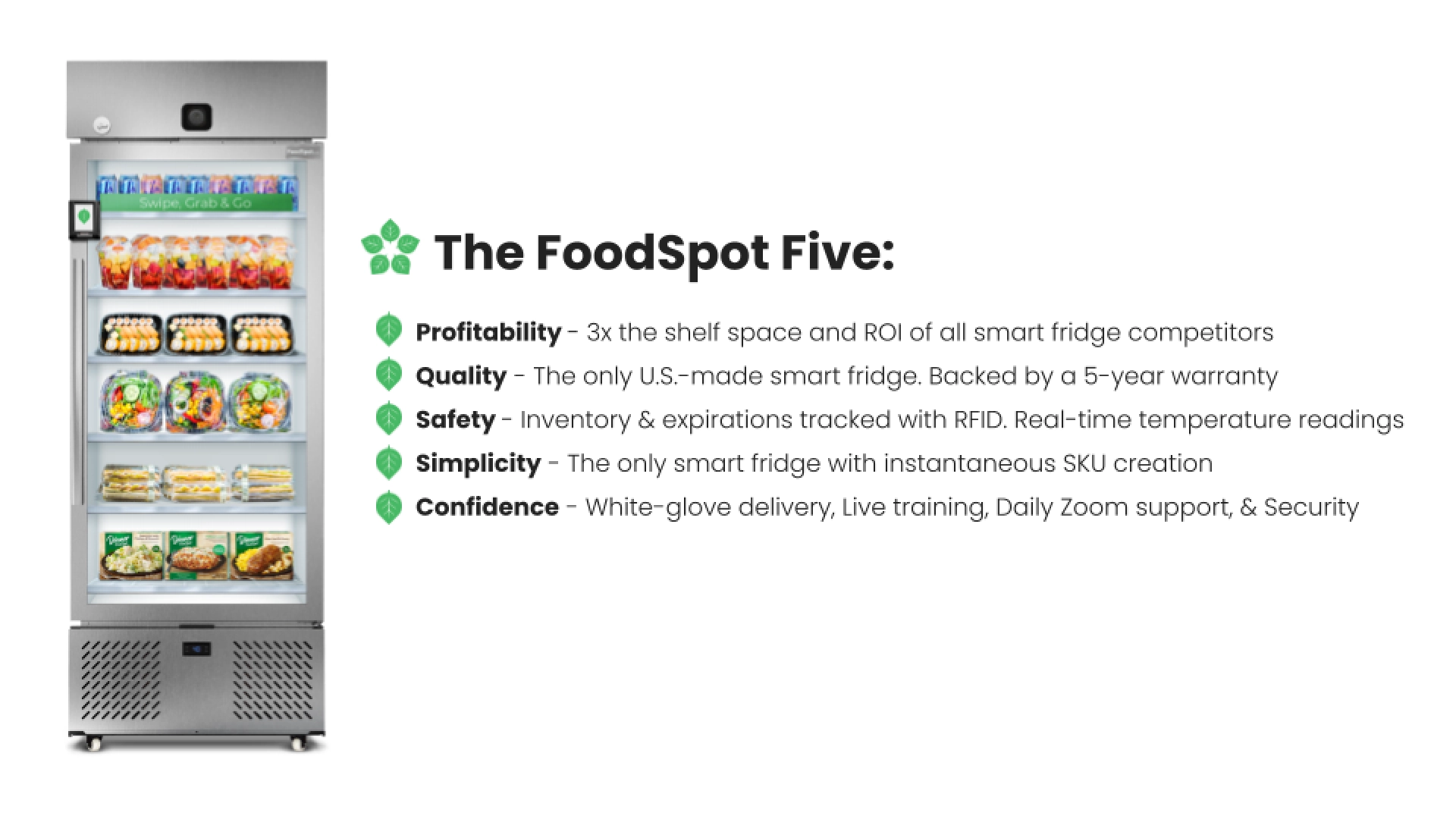
Typically, when people hear this, they think “just another campus vending machine,”—but that framing is outdated. What’s actually being deployed are secure, self-service microstores.
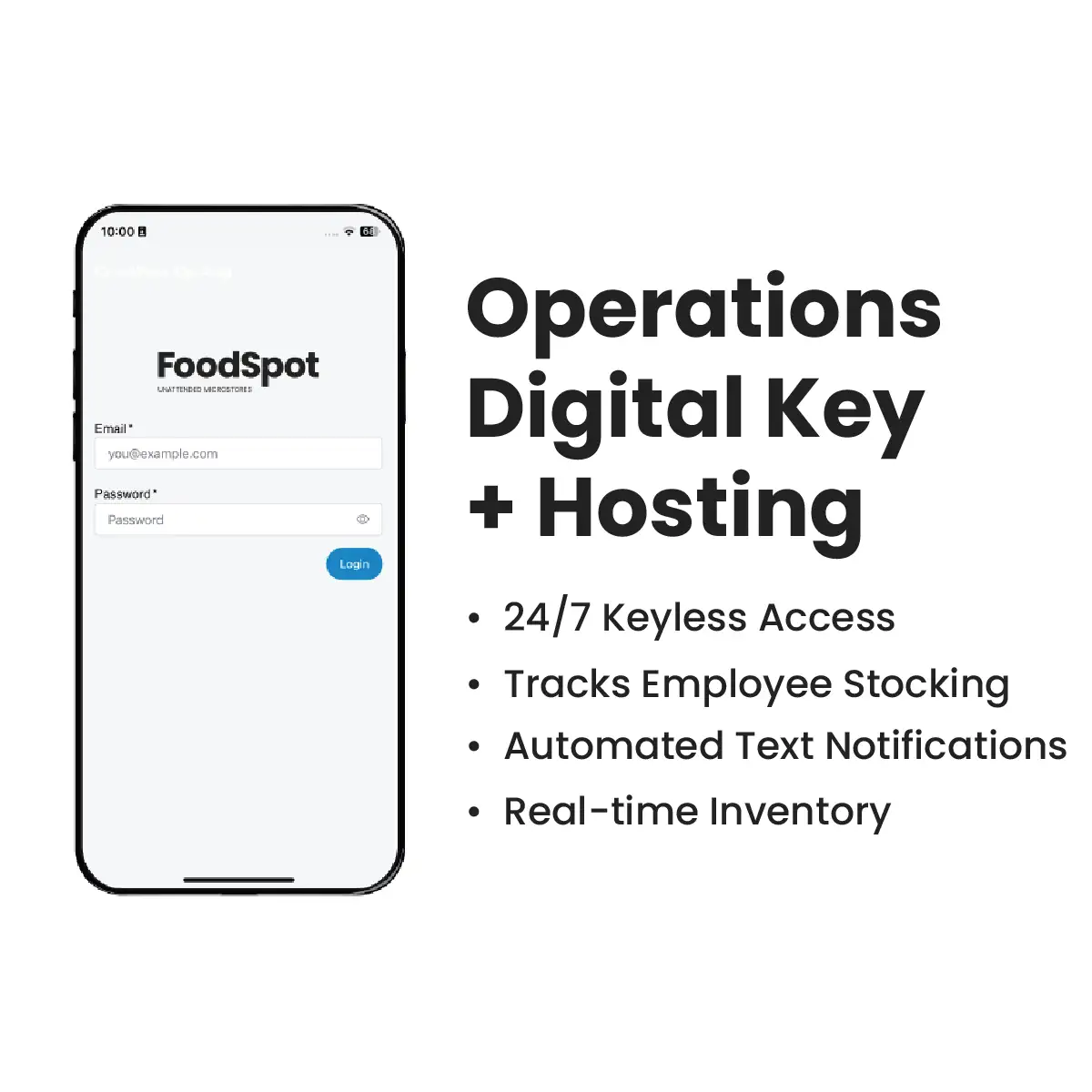
They:
- Offer fresh meals, not just snacks
- Operate 24/7
- Don’t require staff
- Are run by the dining team
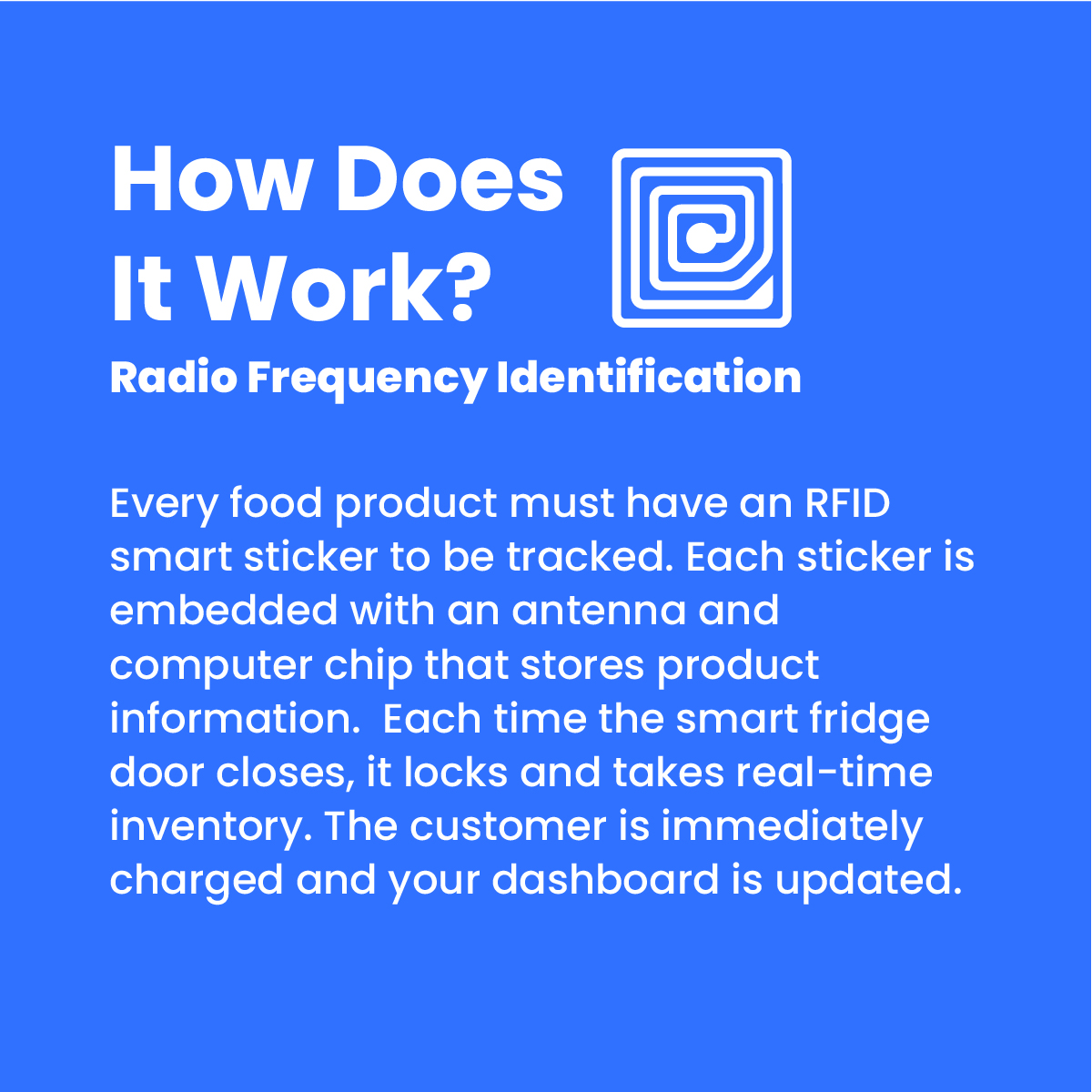
- Track inventory and expirations on a dashboard
They function as part of the suite of campus dining solutions, not outside of them.
Why This Works
It removes the core constraint: labor.
- No staffing needed
- No closing time
- No single point of failure
And instead of forcing students to go somewhere, it meets them where they already are.
Proof: Ohio University
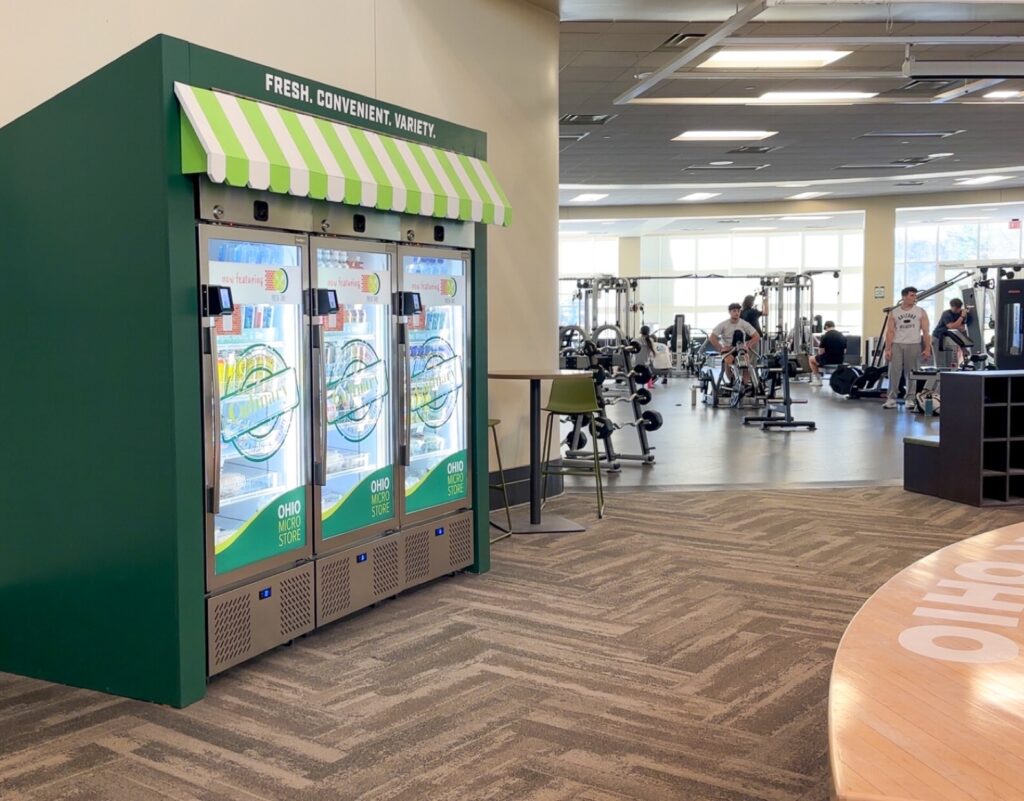
A good example is Ohio University. They placed 13 fresh food microstores across campus
- Located in high-traffic student areas (rec centers, dorms, satellite classroom buildings)
- Immediate student adoption
- Other departments started requesting them
Nothing about student behavior changed. Access changed, and that’s what unlocked usage.
So What Should Universities Do?
If late-night demand exists on your campus (it does), the question isn’t whether to serve it. It’s how to do it without adding labor or extending hours.
Secure, unattended microstores are the modern dining team’s solution to meet late-night, satellite demand without another buildout or hire.
Feel free to reach out if you’re interested in discussing how this looks on your campus.
Key Takeaways
- Late-night food demand is consistent across campuses
- Most current solutions either don’t scale or satisfy
- Labor—not food—is the real constraint
- Distributed, 24/7 access solves the coverage gap
- Universities can capture demand they’re currently losing
FAQ
What do college students eat late at night?
Usually whatever is available—vending snacks, convenience store food, or delivery. Fresh meal options are limited after hours.
Why don’t universities offer more late-night dining?
Because staffing late-night operations is expensive and demand is spread out across campus.
Are vending machines enough for late-night food?
No. They provide access, but not real meal options. Students want fresh, satisfying food.
What’s the best way to provide food after dining halls close?
Make food accessible without requiring staff—typically through distributed, unattended food locations.
Do students actually use late-night food options?
Yes. When access exists, usage follows. Schools consistently see demand outside traditional dining hours.