Fresh food is expensive to make. It’s also easy to steal from an open shelf. This article will walk you through the best ways to sell fresh food unattended while minimizing shrinkage.
When comparing micromarkets, vending machines, and smart fridges, start with one question: Can someone touch the food before the system knows how they will pay?
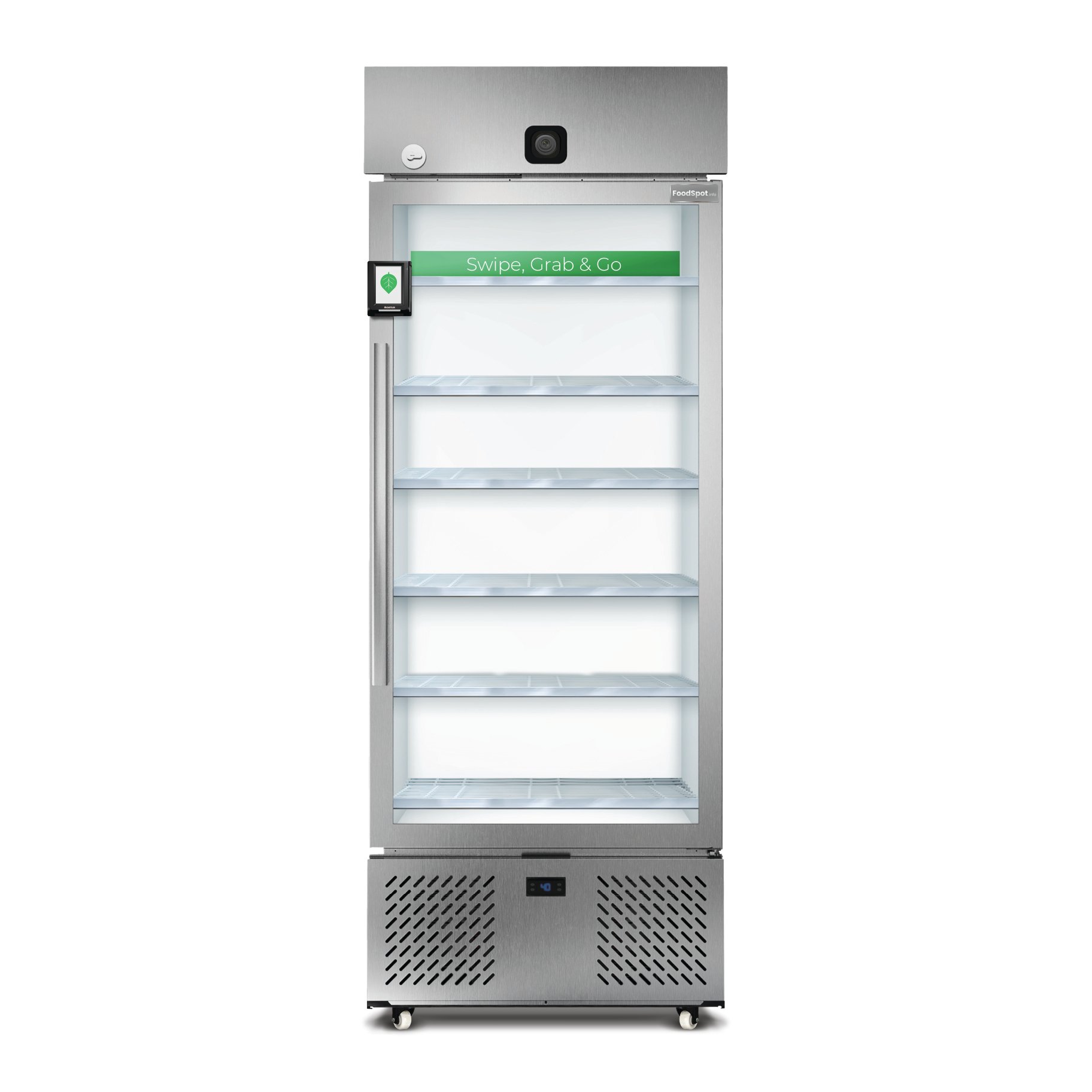
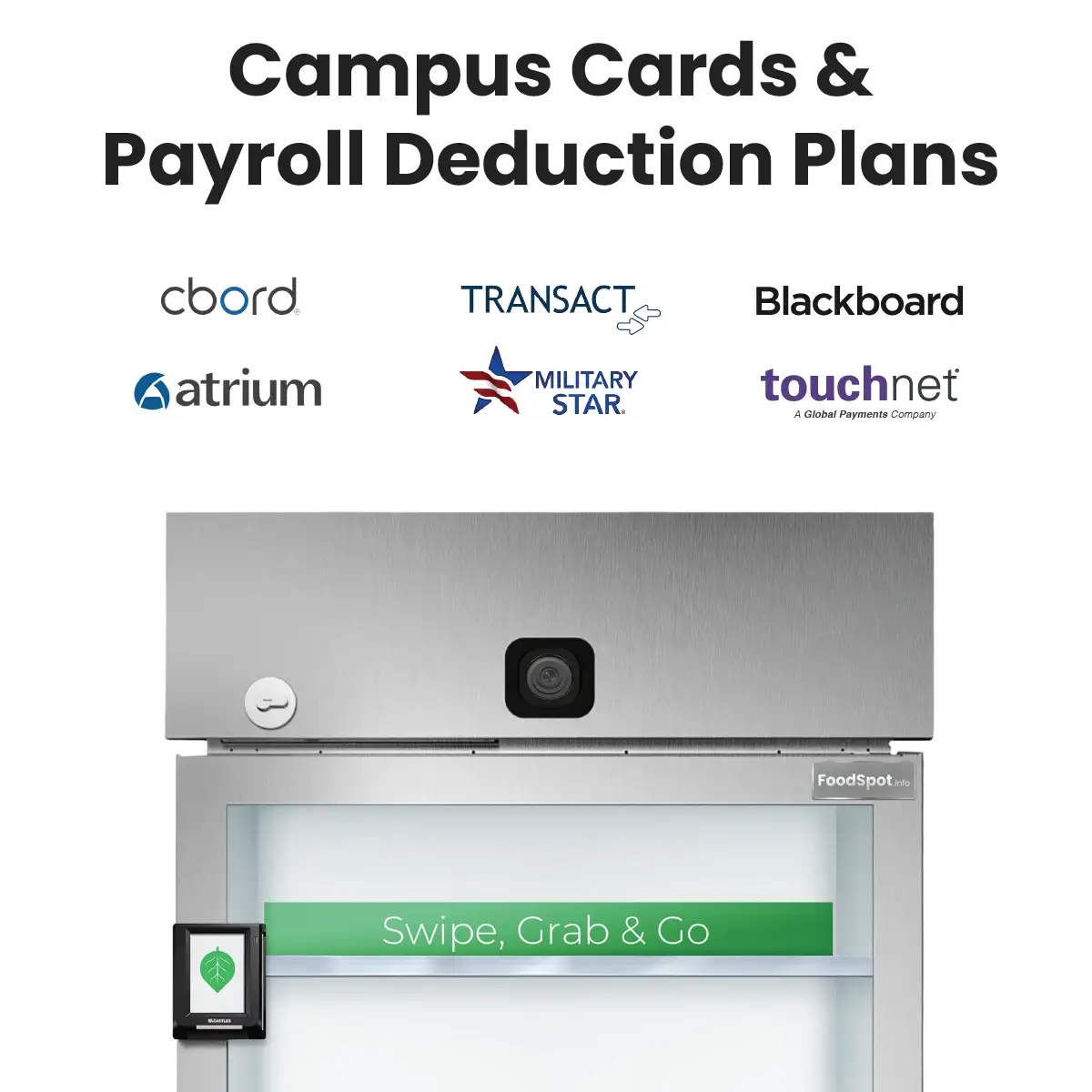
For public and semi-public locations, RFID smart fridges usually give fresh-food operators the best answer. The door stays locked until a card is tapped. Shoppers can still pick up and inspect meals. RFID records what leaves when the door closes.
Theft prevention starts before checkout
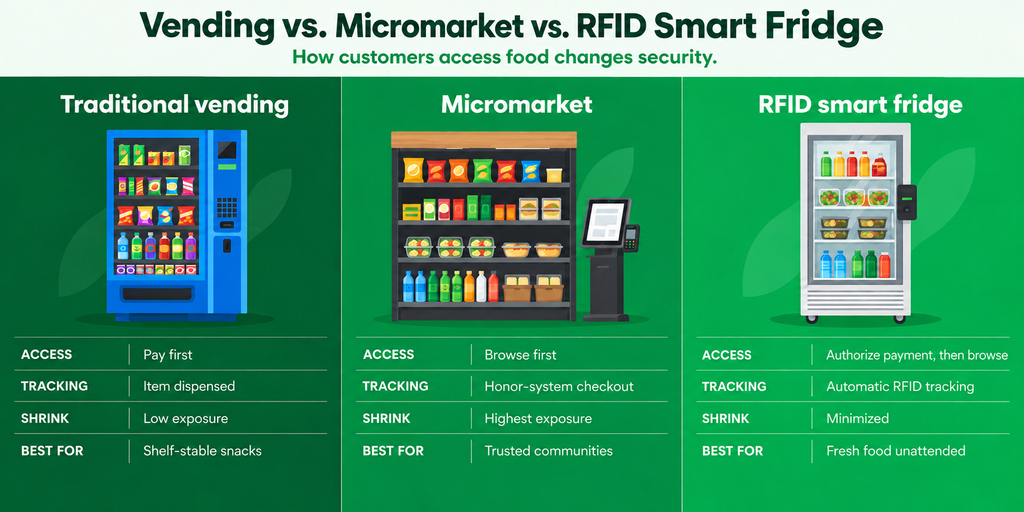
Let’s look at when product access begins for these three solutions.
- At an open micromarket, anyone can pick up a fresh meal before the system knows who they are.
- Traditional vending machines keep the product behind glass but are not equipped for fresh food.
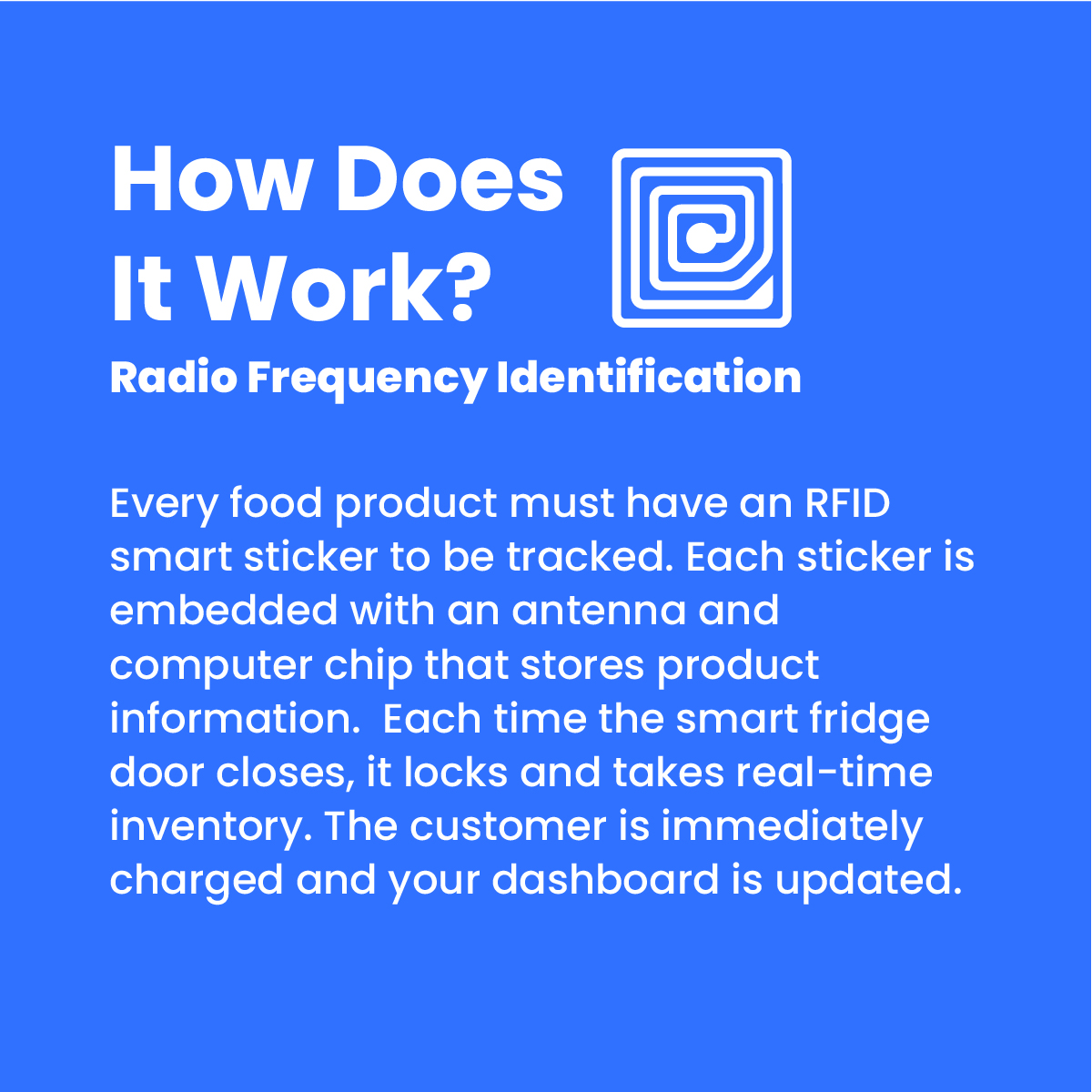
- An RFID smart fridge keeps the natural browse-and-grab experience, but moves identification to the front of the transaction, so you get paid for whatever leaves the unit. Importantly, RFID is designed around food safety, as each product’s expiration is tracked in real time.
Key Takeaways
- Traditional vending provides strong physical control, but it limits product browsing and lacks food safety features.
- Micromarkets create an open retail experience, but open shelves expose operators to more shrink in public or lightly controlled locations.
- RFID smart fridges require payment credentials before access and track products at the item level.
- No unattended system is theft-proof. The right choice depends on food value, location access, customer experience, and operating discipline.
- For high-value fresh food in public or semi-public spaces, a locked RFID smart fridge is usually the strongest overall fit.
How the 3 unattended retail formats control access
Traditional Vending Machines
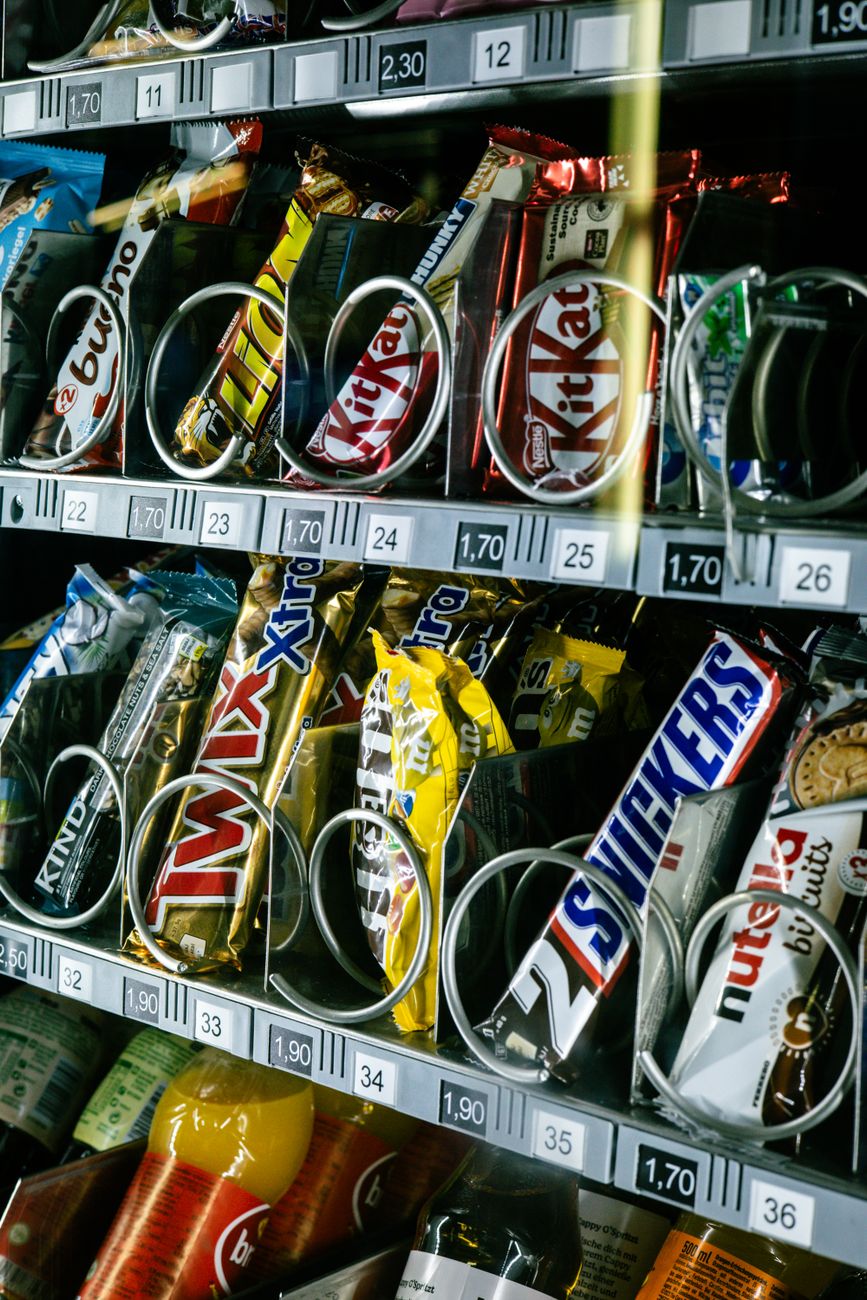
Vending is a locked box. That is its greatest security strength—and the reason it is not ideal for fresh food programs.
Customers pay, choose one item, and wait for the machine to dispense it. That works for standardized products, but breaks down when fresh food is involved: they cannot pick up the salad, check for freshness, read the label, compare two meals, and put one back. When purchasing fresh food, appearance, ingredients, and packaging make the sale.
In addition, traditional vending operators have no way of checking inventory and expirations remotely. Everything needs to be recorded manually and on site.
If you are selling Snickers and Coke, traditional vending is the right solution. If you sell anything resembling fresh food, micromarkets and smart fridges are the better option.
Micromarkets

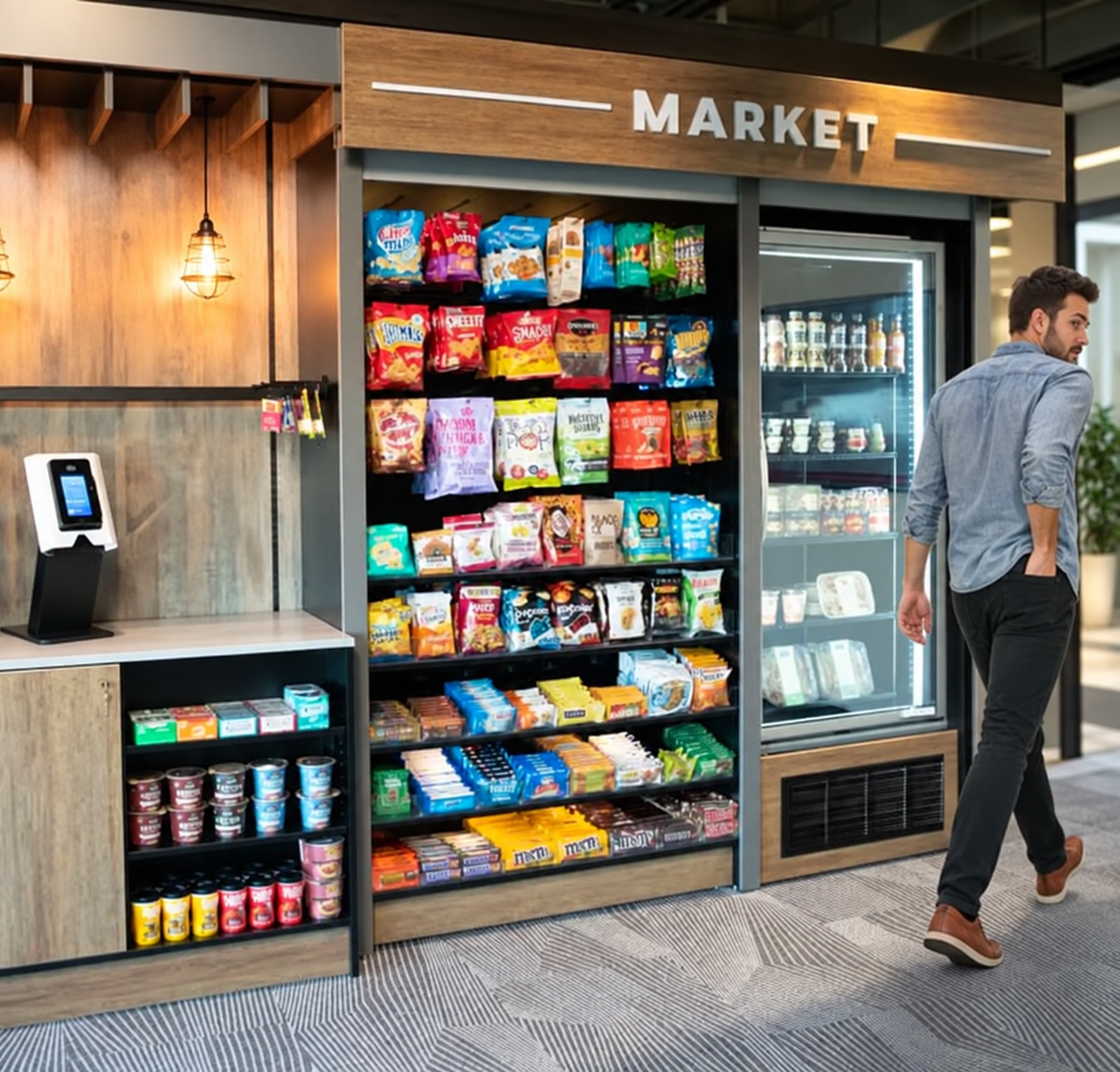
Micromarkets feel like small stores: open shelves, refrigerated cases, and a self-checkout kiosk.
The open layout is appealing, but it’s also a risk. Someone can scan the wrong product or skip self-checkout altogether. Cameras may show what happened later, but tracking the person down can be next to impossible. At the end of the day, the food was available before the shopper identified a way to pay.
As a micromarket operator, you’re faced with a tradeoff between ease-of-access with shrinkage.
Inside a badge-controlled office, this tradeoff may be acceptable. Put the same setup in a hospital lobby, transit hub, or mixed-use building, and the math changes quickly.
If you are in a secure environment and have the budget and space to build out a micromarket, consider doing so. However, if you are thinking of selling fresh food in any high-traffic public space, you need more security.
RFID Smart Fridges

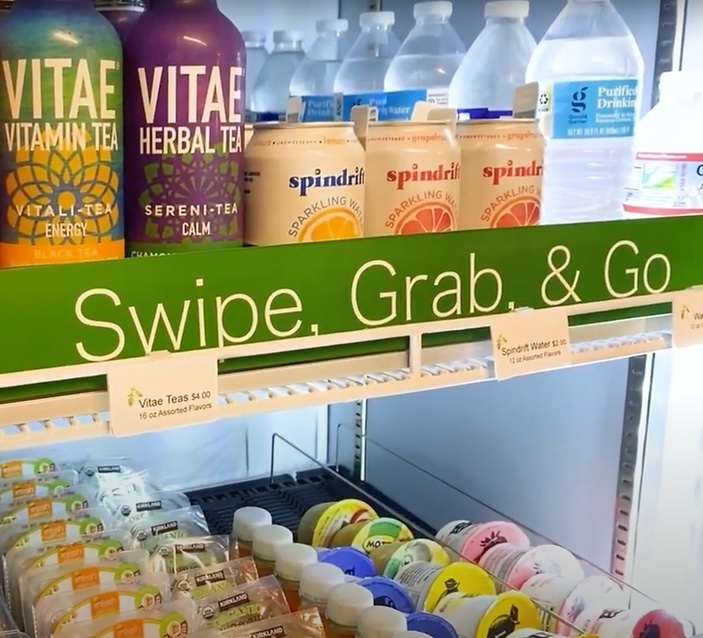
An RFID smart fridge changes the order of the transaction. Tap a card first. Open the locked door. Pick up the food, read the label, and put back anything you do not want. Close the door, and the system automatically charges for products that you took.
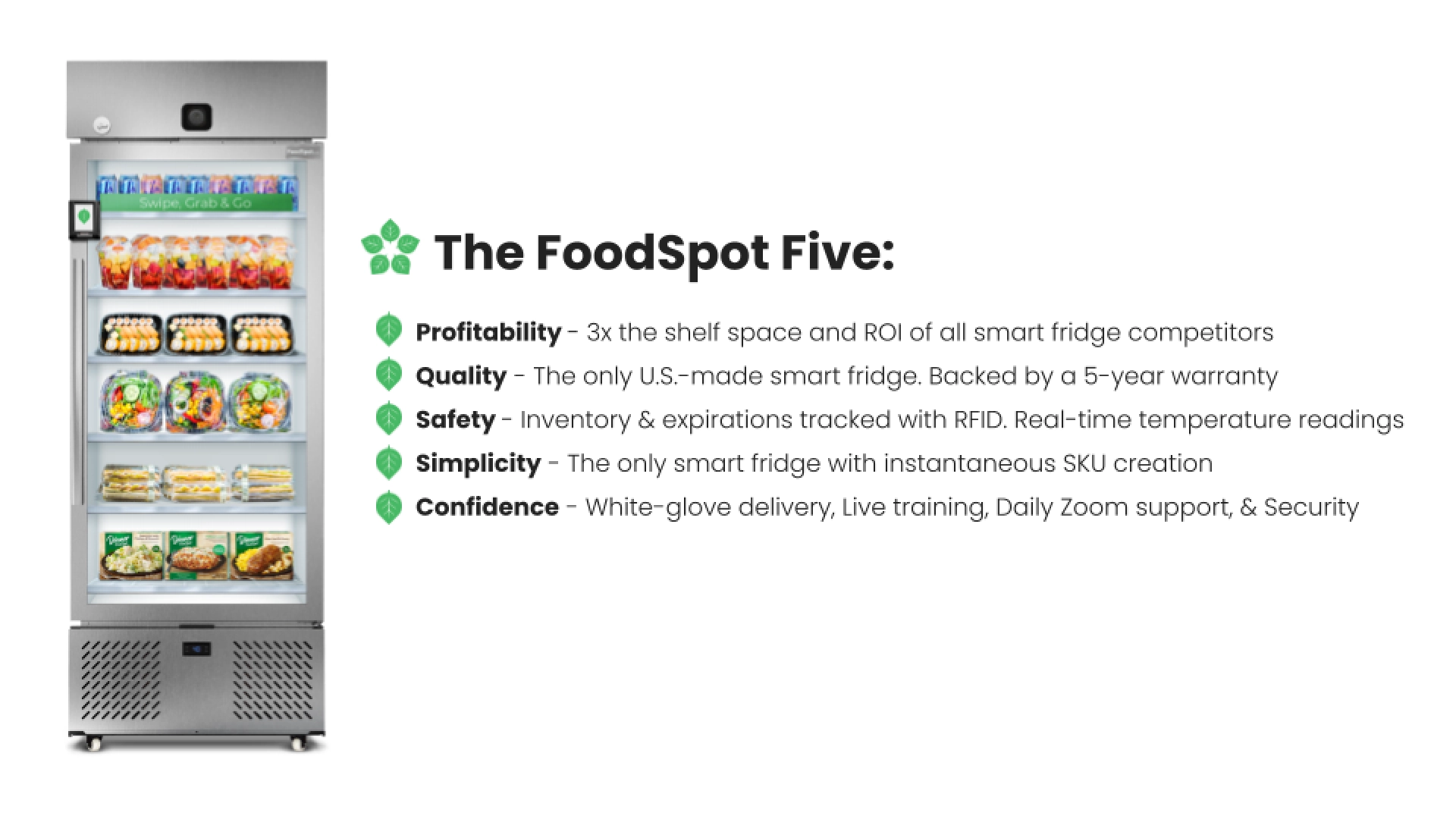
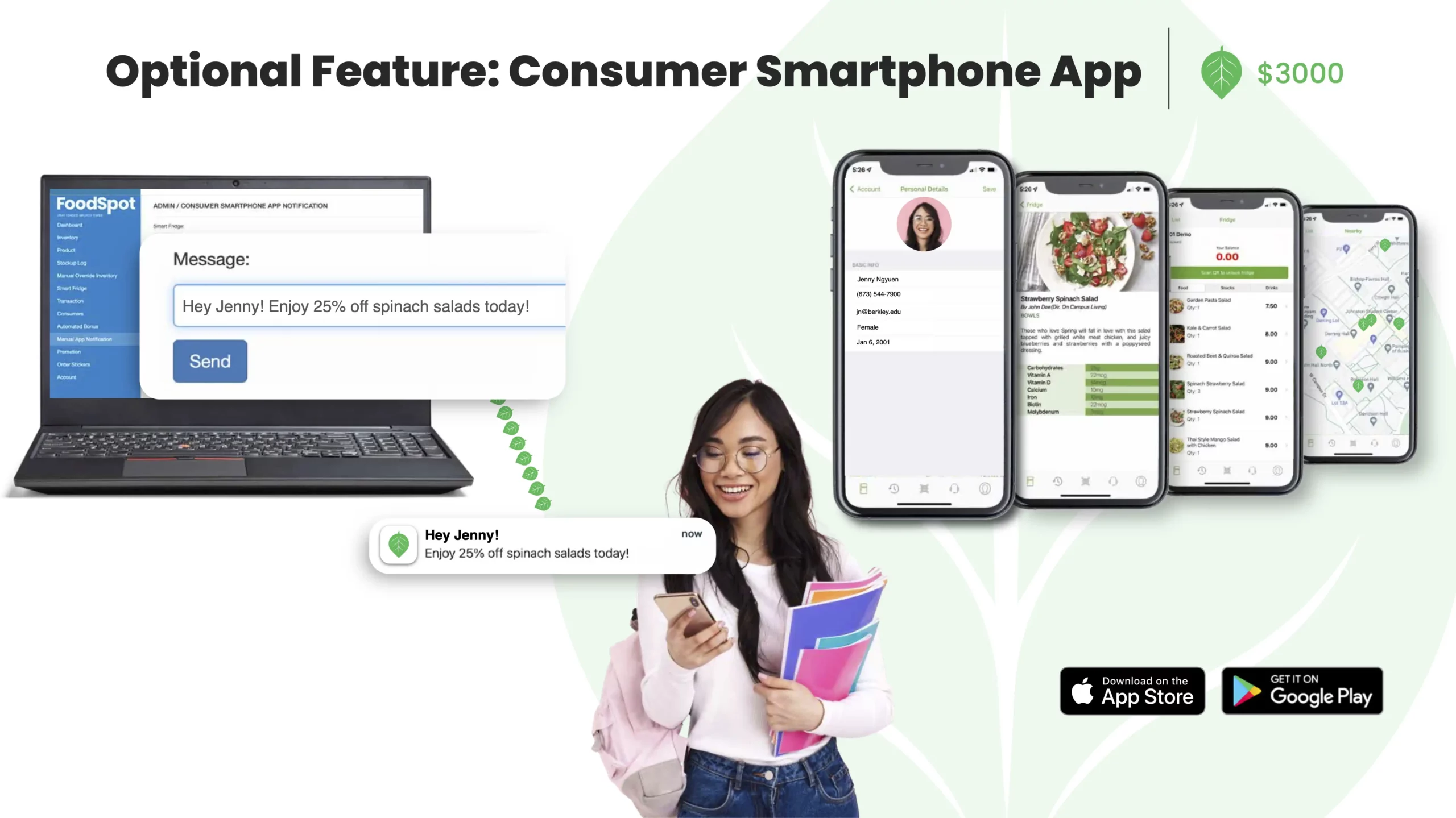
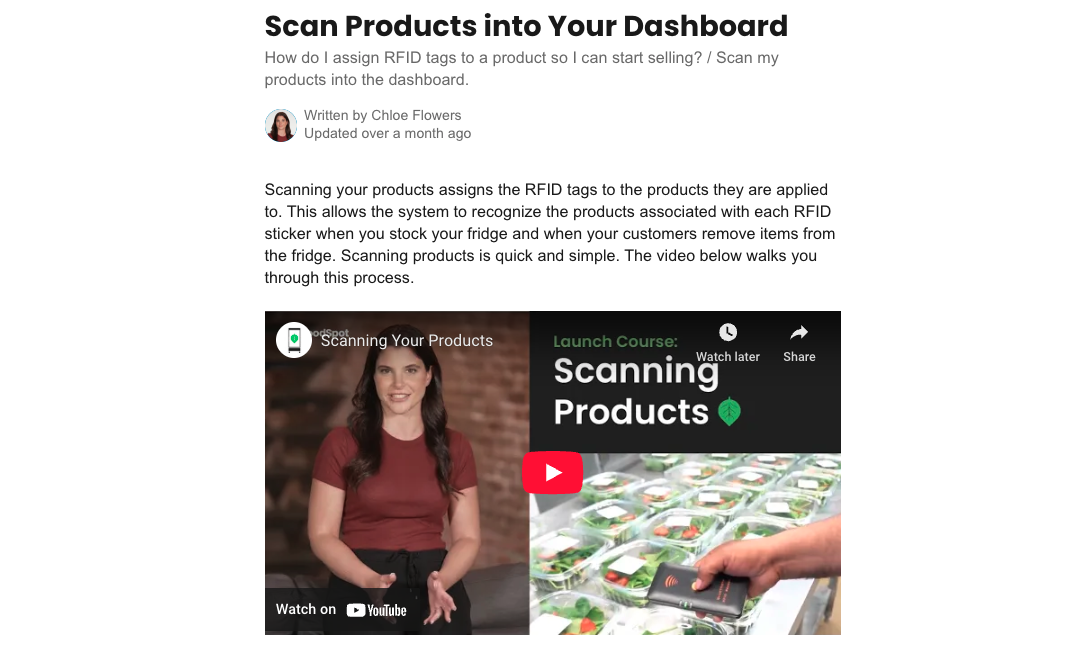
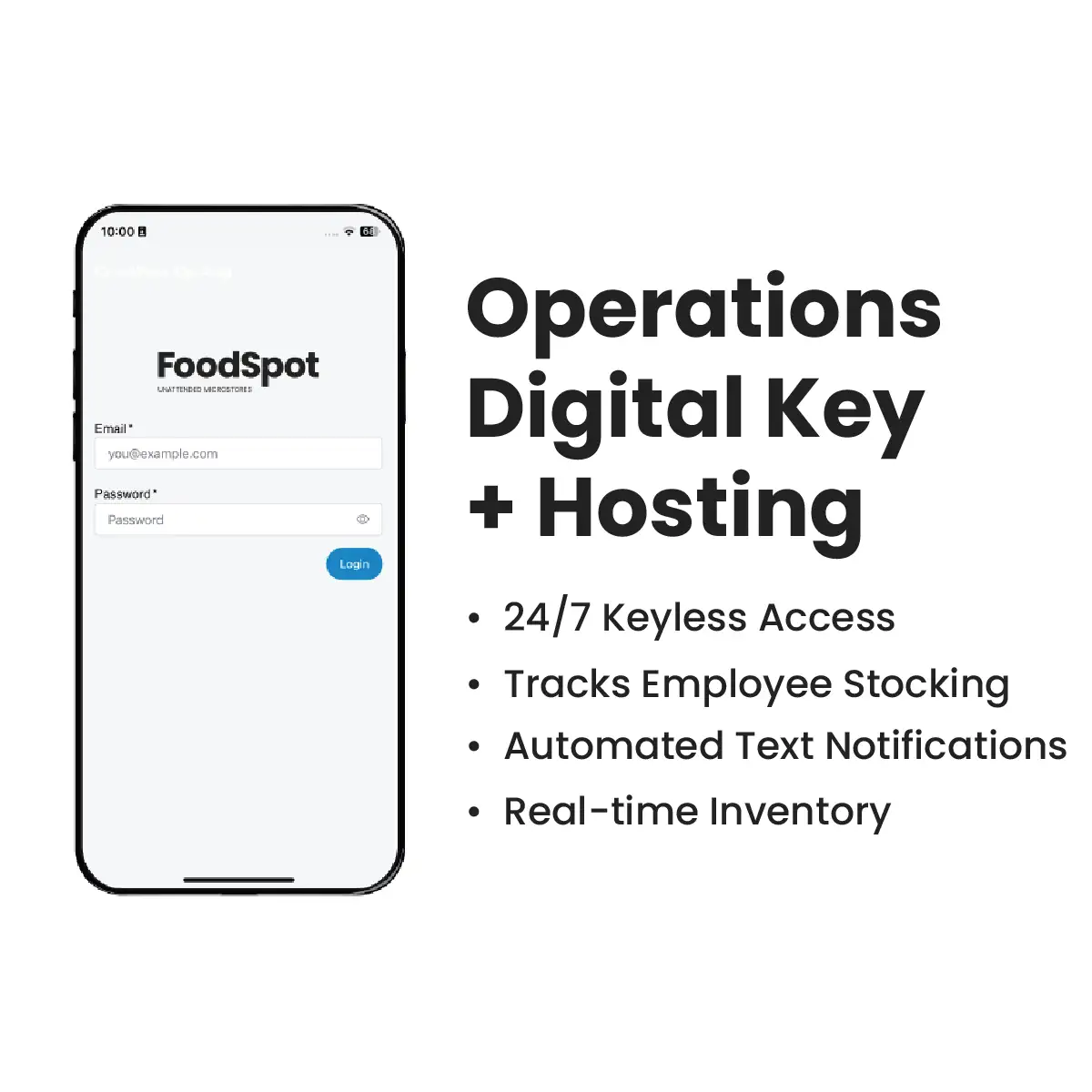
Because each item is tagged, there is no guesswork when it comes to inventory or food safety. From a dashboard, an operator can see real-time inventory, individual product expirations, and a temperature log.
Micromarket vs. Vending Machine vs. RFID Smart Fridge
| Decision factor | Traditional vending | Micromarket | RFID smart fridge |
|---|---|---|---|
| Access before payment | No | Yes | Only after payment pre-authorization |
| Customer can browse products | Limited | Yes | Yes |
| Inventory tracking | Only dispenses selected product | Honor-system-based | Automatically detected |
| Shrink exposure | Low-risk | High-risk | Minimized by locked access and transaction traceability |
| Fresh-food fit | Limited by food safety, packaging, and dispensing | Good in controlled locations | Strong for public and semi-public locations |
| Footprint | Compact | Usually the largest | Compact |
| Best use | Standardized shelf-stable products | Trusted, controlled communities | High-value fresh food sold unattended anywhere |
Why fresh food changes the security decision
When it comes to loss, a missing candy bar is a prick on the finger. A missing fresh meal is a lost arm: tied up in a single fresh meal is supply chain labor, ingredients, kitchen labor, packaging, refrigeration, and a short shelf life. Fresh food shrink gets expensive fast.
Fresh food can also disappear without being stolen. If an operator cannot see which salad expires first, good inventory turns into waste. Item-level RFID data connects each product to both a transaction and an expiration date, so operators can manage shrink and spoilage from the same dashboard.
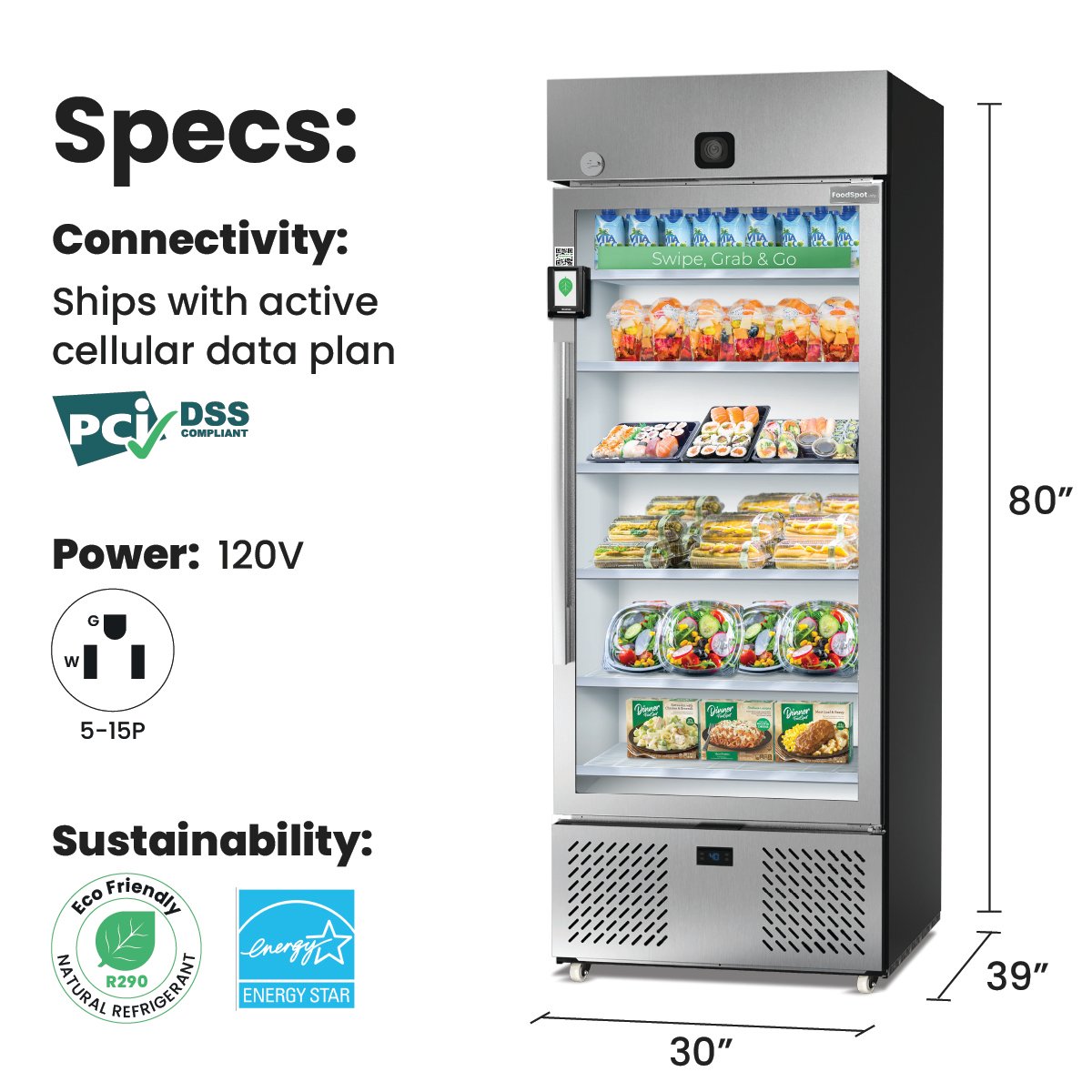
Then there’s capacity: FoodSpot microstore provides 3,774 square inches of shelf space—enough room for an enormous mix of meals, snacks, and drinks without the enormous footprint of a full micromarket.
Which format is right for your location?
- Choose traditional vending when selling shelf-stable products
- Choose a micromarket when you have a large budget, a large footprint, and a private space
- Choose an RFID smart fridge when selling higher-value food in a public or semi-public location
A corporate office with badge access may tolerate an open micromarket. An airport, hospital lobby, gym, manufacturing plant, or mixed-use building needs a tighter access model. The more public the location and the more valuable the food, the more important preauthorized access becomes.
A practical theft-prevention checklist
- Require a payment method before access. This creates accountability before the shopper can touch the food.
- Use a physical lock. The door should remain secured between transactions.
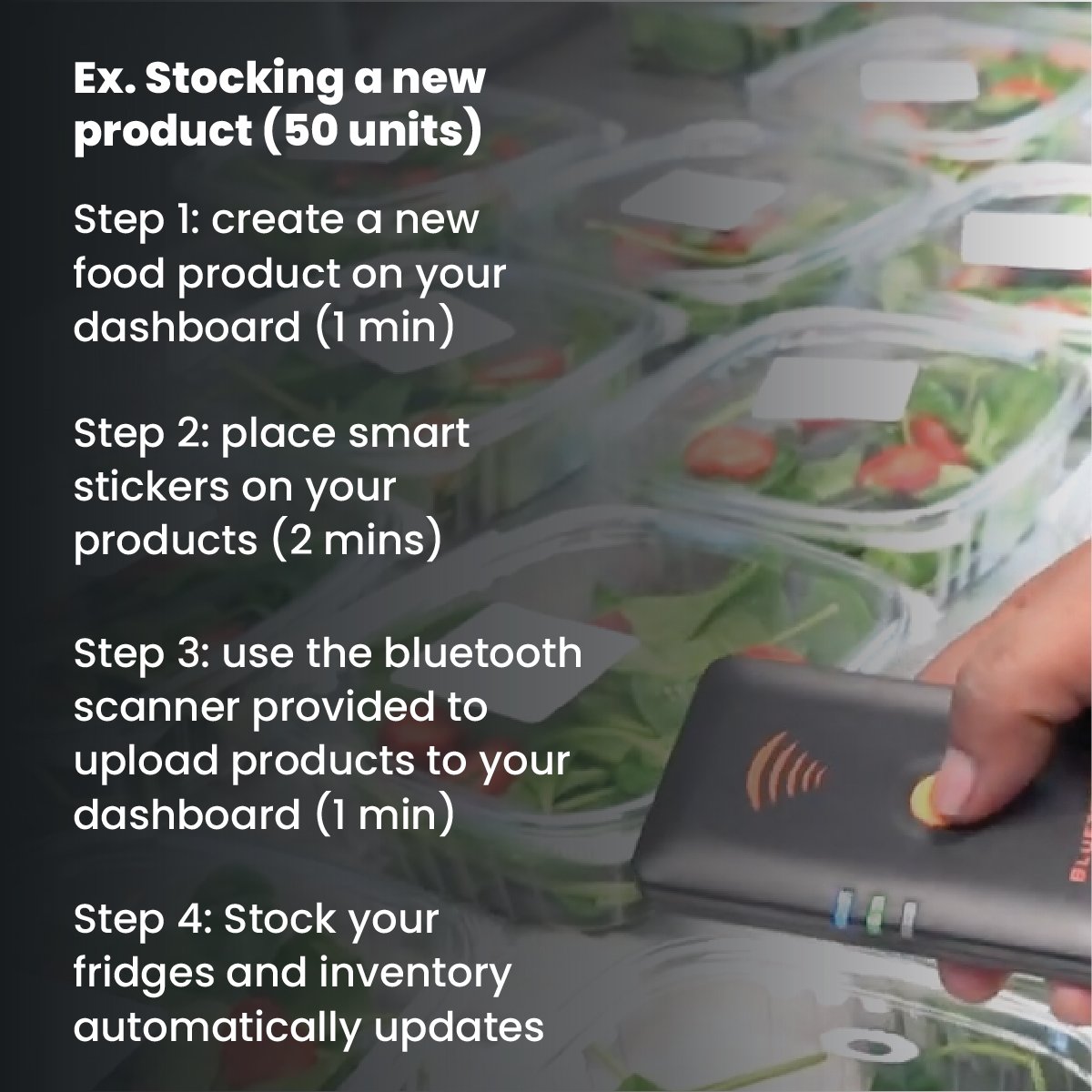
- Track individual products. Item-level tracking ensures you get paid for everything that leaves the unit. Smart fridges do this with one of three technologies (compare them here).
- Add visible camera coverage. Security cameras support deterrence and review when something does not match.
- Review exceptions. Repeated payment failures, inventory mismatches, and unusual transactions need a human process.
No single control eliminates theft. The goal is to make normal transactions easy, unauthorized access difficult, and exceptions traceable.
How FoodSpot supports secure unattended fresh-food sales
FoodSpot was built around this sequence. A payment method unlocks the deadbolt-secured door. RFID tracks each product. The dashboard shows inventory and expirations in real time. An AI security camera adds another layer of accountability by saving footage tied with each transaction for the operator to pull up easily from the dashboard.
If your goal is to sell fresh food without opening a new location, security is not an accessory—it’s a necessity.
If shrink risk has kept you from opening a new unattended location, email hello@launchfoodspot.com. We can help you pressure-test the site before you commit.
Frequently asked questions
Are RFID smart fridges theft-proof?
No unattended retail system is theft-proof. RFID smart fridges reduce exposure by locking products between transactions, requiring payment credentials before access, and tracking and charging for items automatically.
Do RFID tags prevent theft on their own?
No. RFID tags identify products. Theft prevention comes from combining item-level tracking with a locked door, authenticated access, payment records, camera coverage, and operator review.
Is a vending machine more secure than a smart fridge?
A traditional vending machine provides very strong physical product control because it releases only the paid selection. An RFID smart fridge usually offers a better balance for fresh food because shoppers can inspect products while the system preserves locked, traceable access and food safety.
When does a micromarket make sense?
A micromarket can be a good fit in a controlled community with known users, enough floor space, and tolerance for open-shelf shrink. It is a weaker fit for public locations where anyone can reach the food before paying or providing a payment method.
Can an RFID smart fridge track expiration dates?
Yes, when each product is tagged and its data is maintained in the system. FoodSpot lets operators monitor real-time inventory and individual product expirations remotely.